School of Bias
An interactive educational platform teaching behavioural science through lessons grounded in the relevant research.
Overview
School of Bias is an educational platform built to teach behavioural science in an engaging way while staying grounded in the latest research.
The platform covers courses across domains where behavioural science operates most visibly, including health, finance, gambling, altruism, and consumerism. Each course is broken into structured lessons, with quizzes that must be passed before the next lesson unlocks.
Demo
Research as foundation
Building the content meant going back to the primary literature, such as Kahneman and Tversky on prospect theory and Thaler on mental accounting, and turning the key mechanisms in those papers into lessons that actually teach.
Organisations like the Behavioural Insights Team and The Behaviourlist regularly publish research on how behavioural science is applied in the real world, and keeping up with that work is what keeps the curriculum relevant.
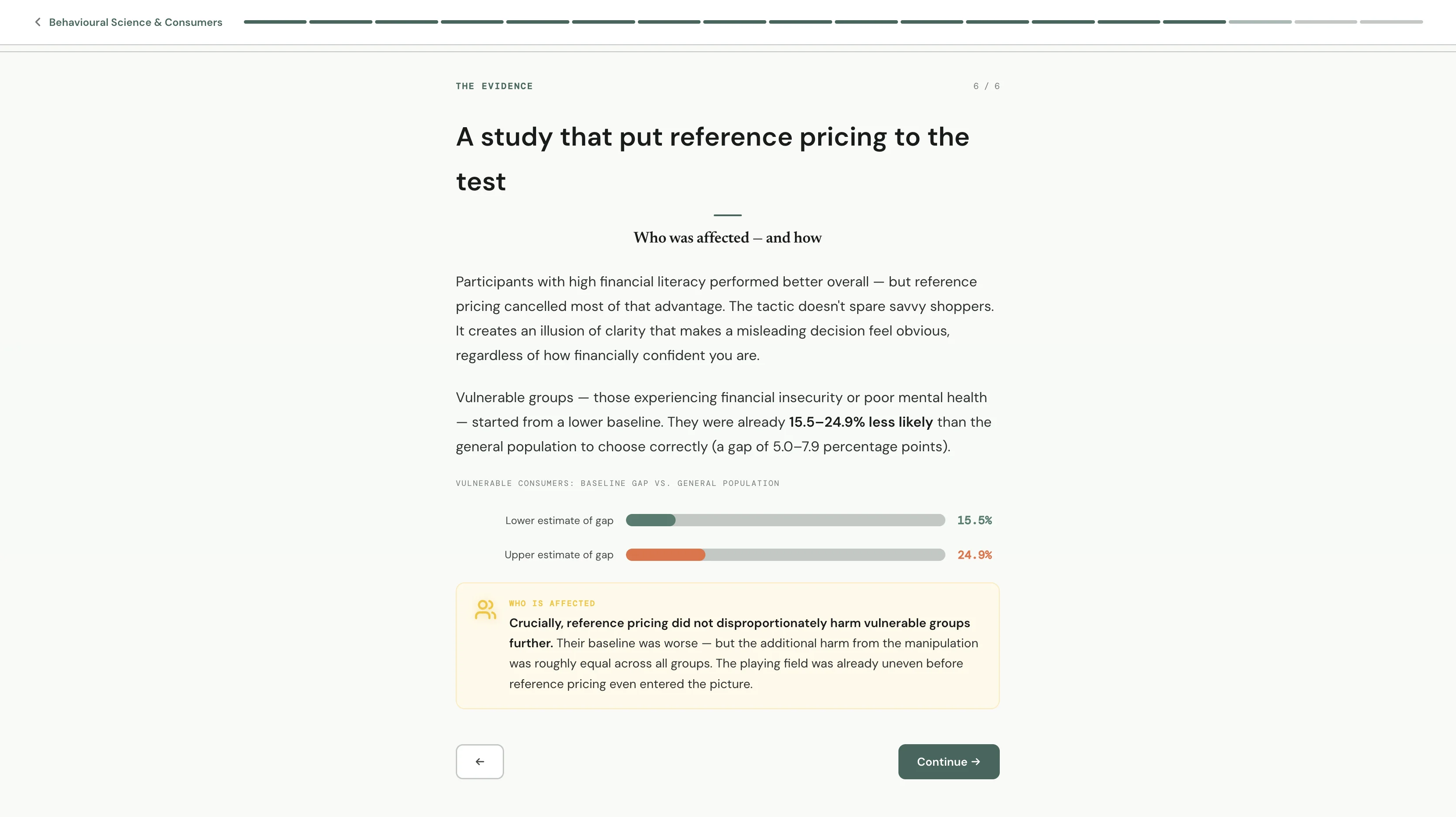
Lessons
Custom interactive elements
Every lesson uses custom-built interactive components, from animated visualisations to playable scenarios, each designed to make a specific concept tangible. I built them from scratch because the concept being taught determined what each interaction needed to do.
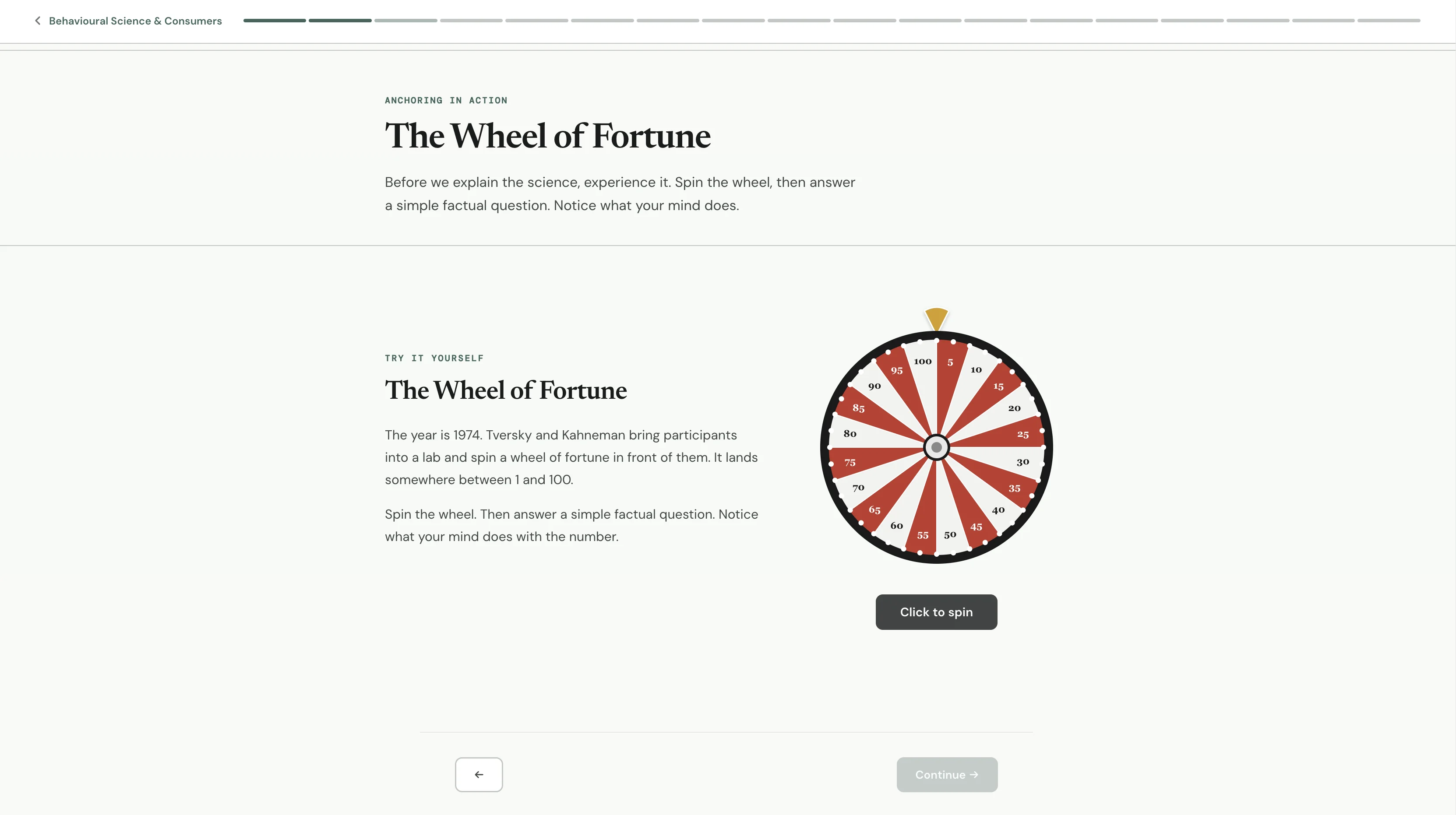
Interactive
Why Svelte
I built this in Svelte to learn a new framework and to test a different approach to building interfaces. Svelte compiles each component into plain JavaScript at build time, which updates the page directly and produces smaller, faster code than frameworks that ship a runtime to the browser.
That speed mattered for a platform full of simulations and animated transitions that need to run smoothly. Learning Svelte also forced me to understand how reactivity actually works underneath the abstractions.
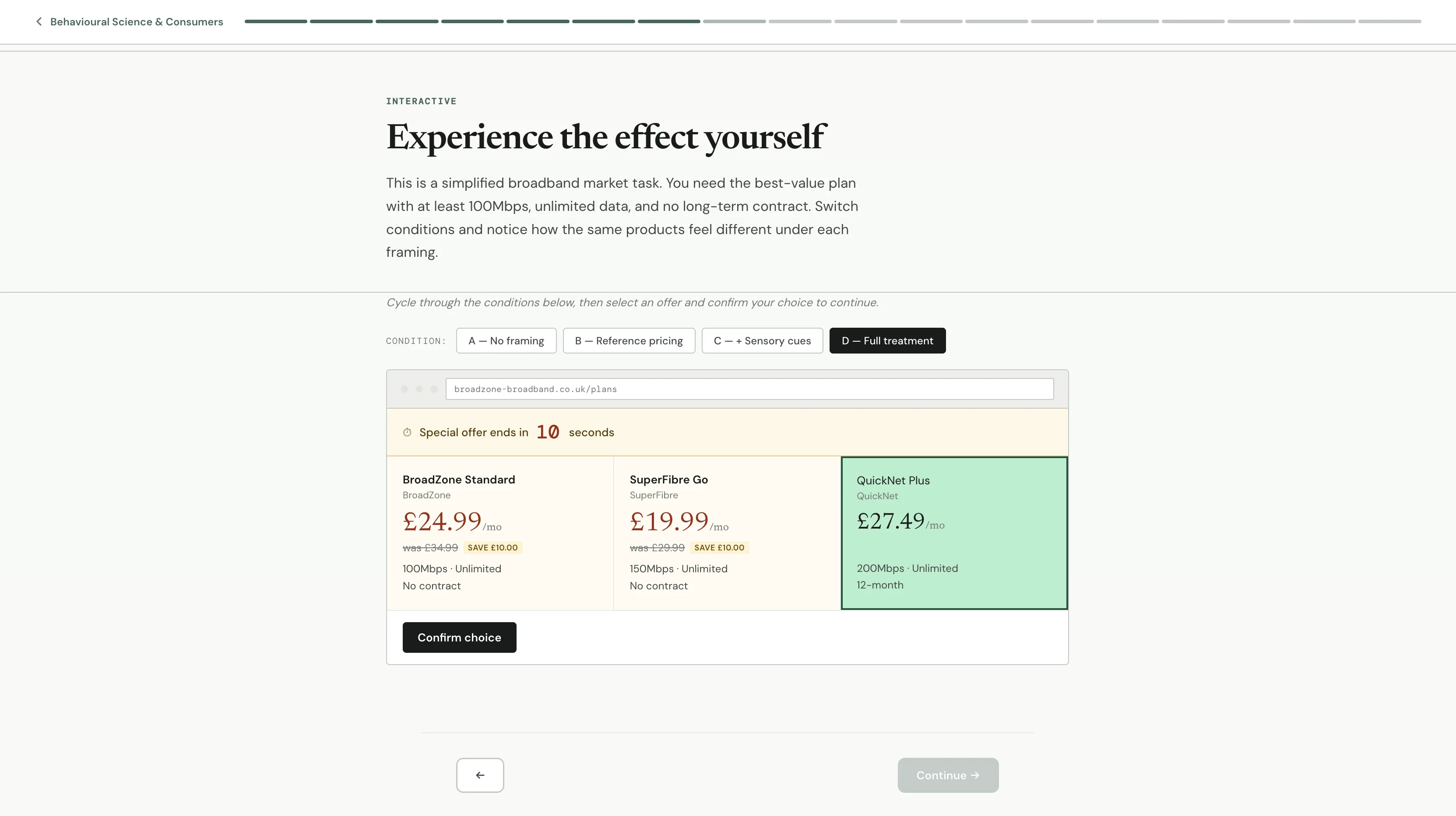
Courses
Progress and structure
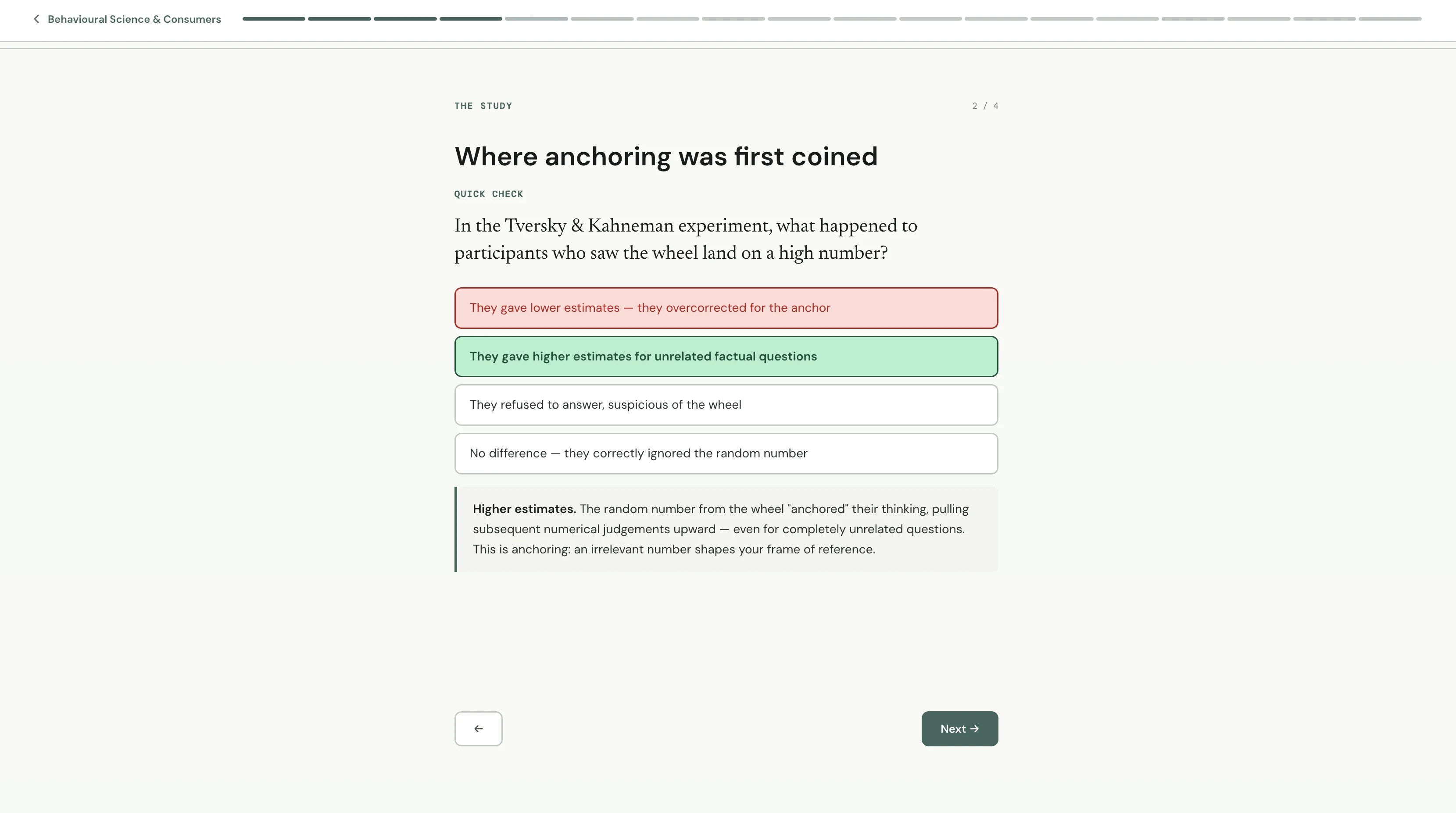
The platform tracks progress per lesson and gates content behind quiz completion. The gating system was used to encourage genuine engagement with the material.
A library section lets users explore books related to behavioural science. New suggestions are checked automatically for relevance using Gemini and the Open Library API, so the collection can grow through community contributions while keeping a meaningful standard for what belongs in it.
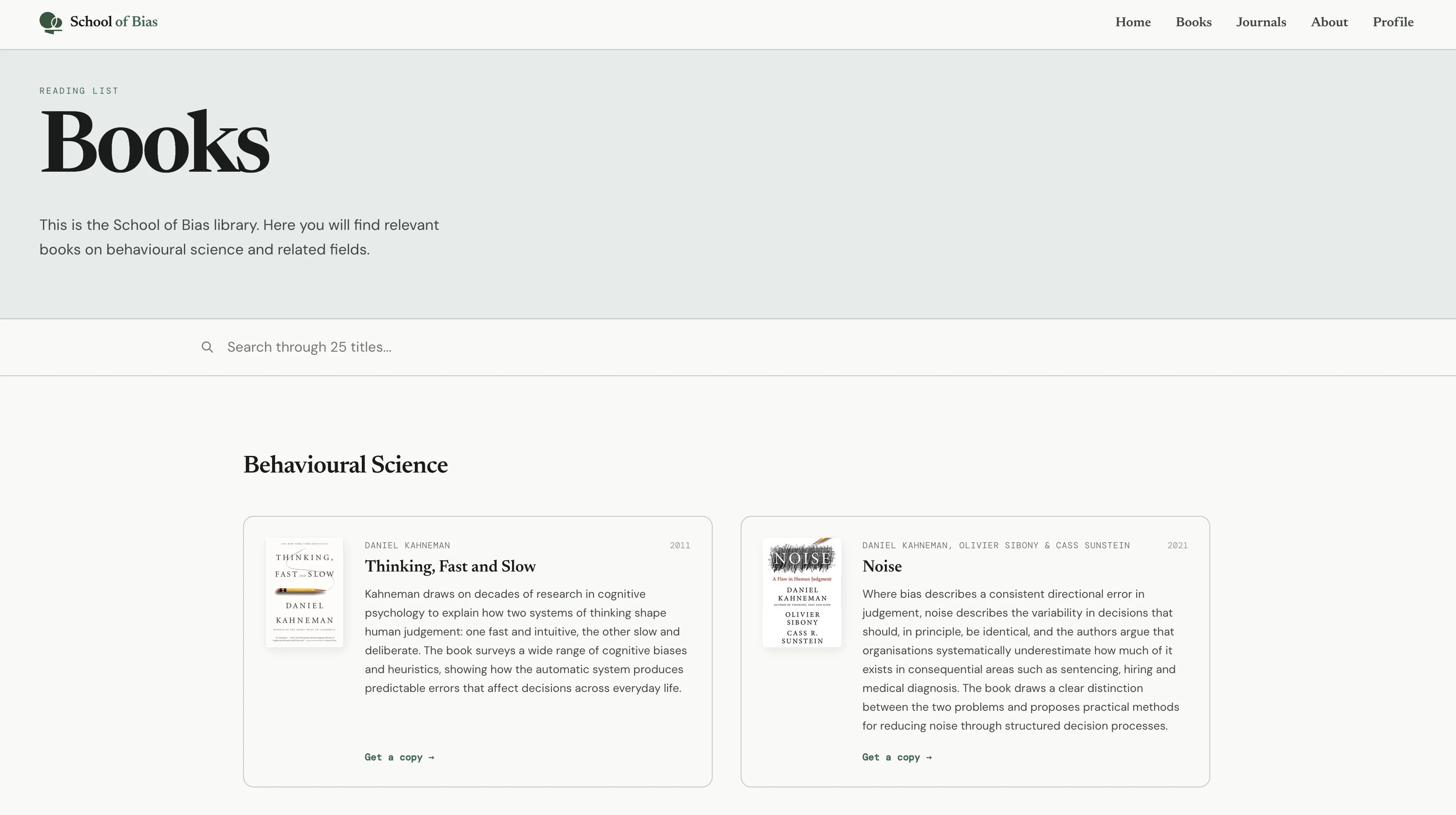
Library
Producing the demo video
The demo video was assembled using a chain of tools, each handling a different part of the process. The raw footage was recorded in several short segments using QuickTime Player, then imported into Descript where the clips were ordered, joined together with transitions, and refined using pan and zoom animations. The title card at the end was designed separately in Stitch and compiled at the end of the video with a matching transition. After export, Wink was used to manually remove the watermark before the footage was brought into Canva for the final edit.
The audio was put together in two parts. The background music was generated using Suno and the narration was produced in ElevenLabs, with sentence timing and pacing adjusted to sit against the visual segments properly. Both were layered into the Canva video editor alongside the footage, with the music faded in at the right moment and the voice timed to match the features it was describing.
Quizzes
Why I built this
Reading Rutger Bregman's Moral Ambition made me ask the question, if you have a specific set of knowledge and skills, what is actually the most useful thing you can do with them? Building a platform that made behavioural science accessible felt like a meaningful use of my time and skills.
Built with
- Svelte
- TypeScript
- Vite
- PostgreSQL
- Drizzle
- Clerk
- HTML
- CSS
- Vercel
- Stripe
More projects