Being & Thought
A site of original essays spanning philosophy, neuroscience, economics, and literature, where art and music tie the ideas together.
Overview
Being & Thought began as a personal essay site and my first foray into web development. It has grown into a space where writing, design, and learning develop together, part archive of ideas and part workshop for skills across philosophy, behavioural science, and creative practice.
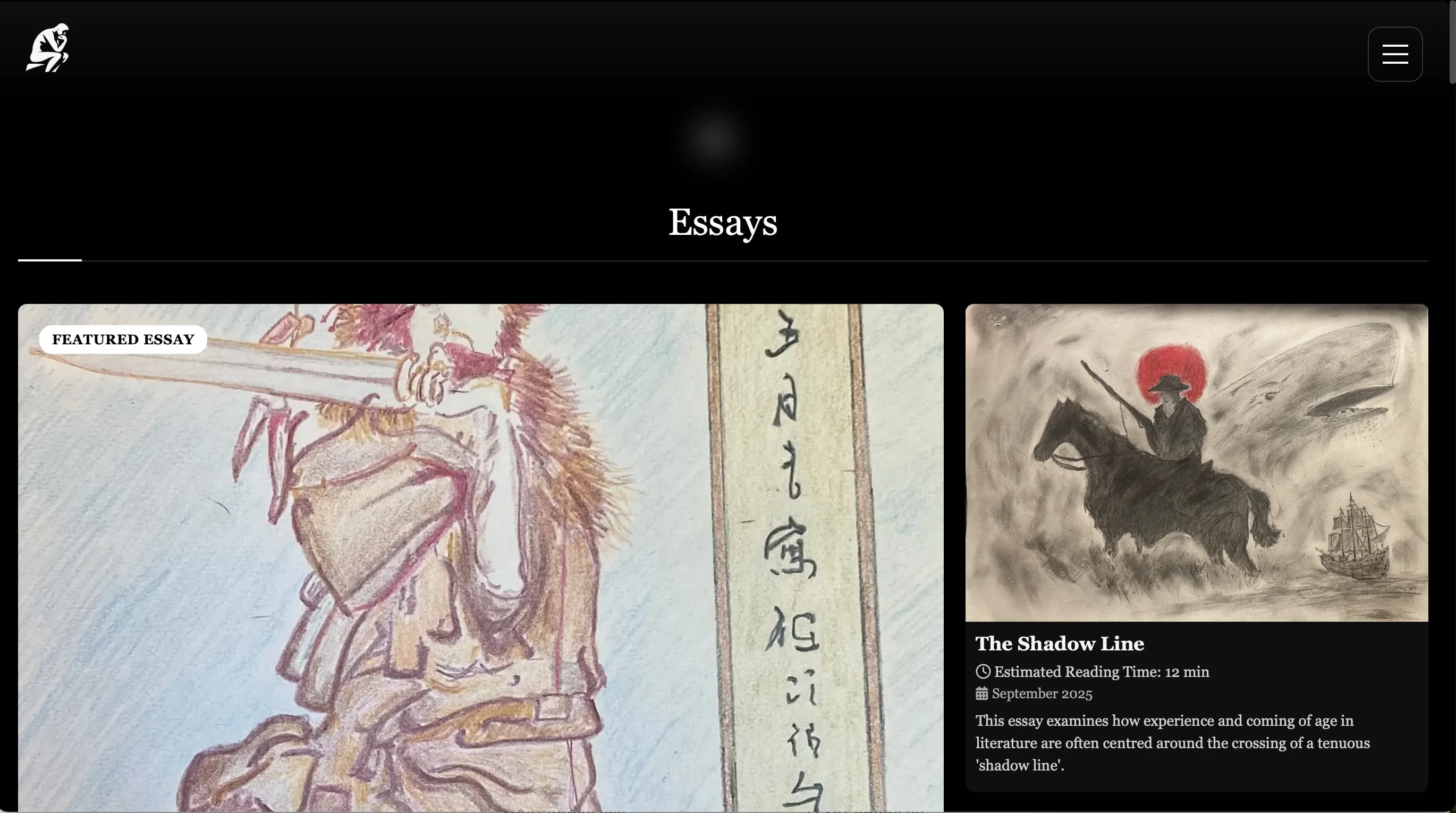
Essays
Intent
Being & Thought is built around developing ideas over time. An essay might begin roughly, get reworked, and return later in a more precise form, with the writing, visuals, and structure all part of the same process.
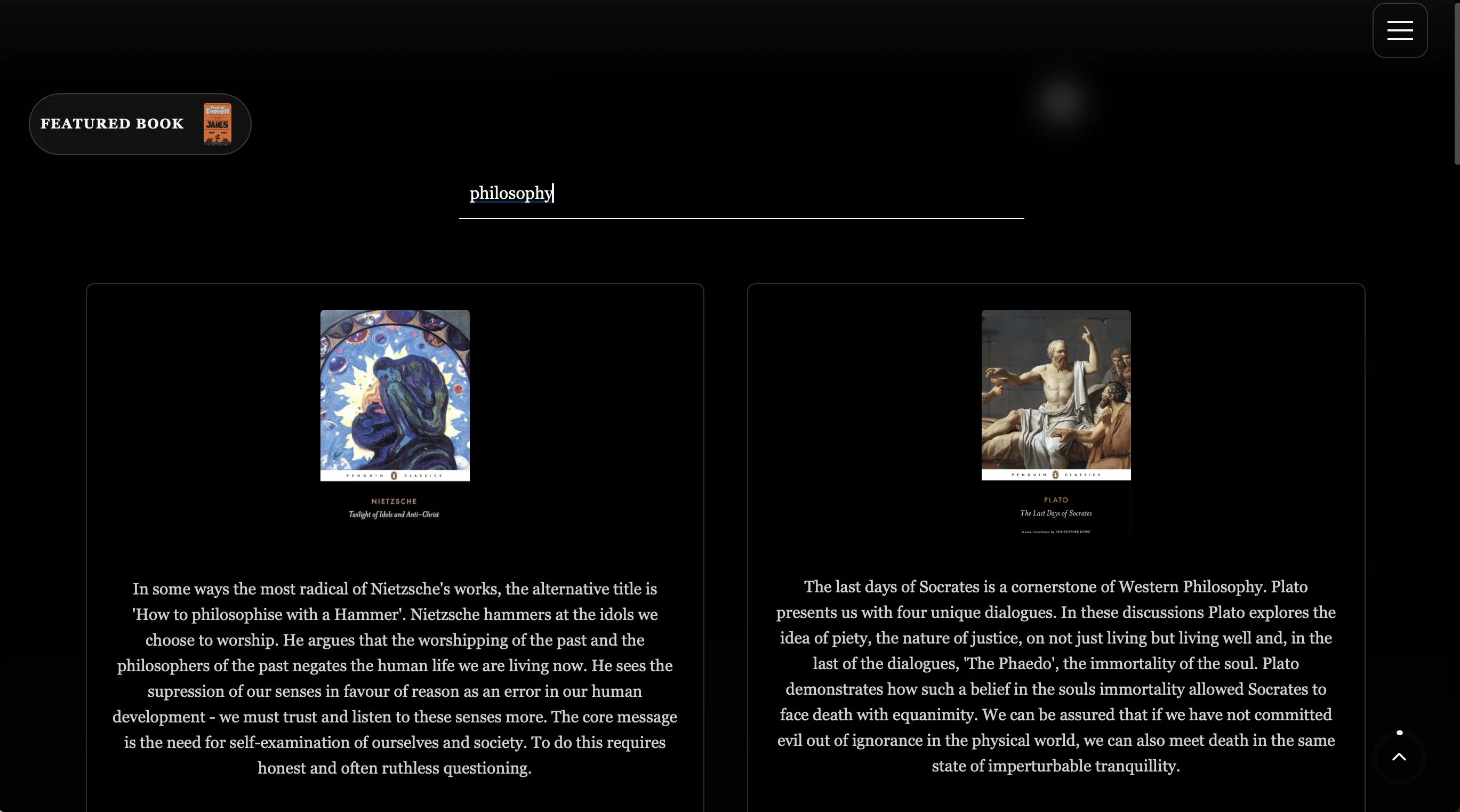
Library
Learning through building
This project also marks my first sustained attempt at learning to code. Moving from the Harvard web programming course to designing and maintaining this site was a substantial step, involving early familiarisation with Git, hosting workflows, deployment, and the realities of building something that actually lives on the web.
Over time, the site became a place to practise animation, layout, and foundational frontend logic, with each iteration pushing a little further than the last. Improvements were rarely planned in advance, but emerged from experimentation, mistakes, and gradual confidence. I am now learning the latest web tools and though I wish I knew about React, Next.js and Typescript earlier, I do not at all regret the process!
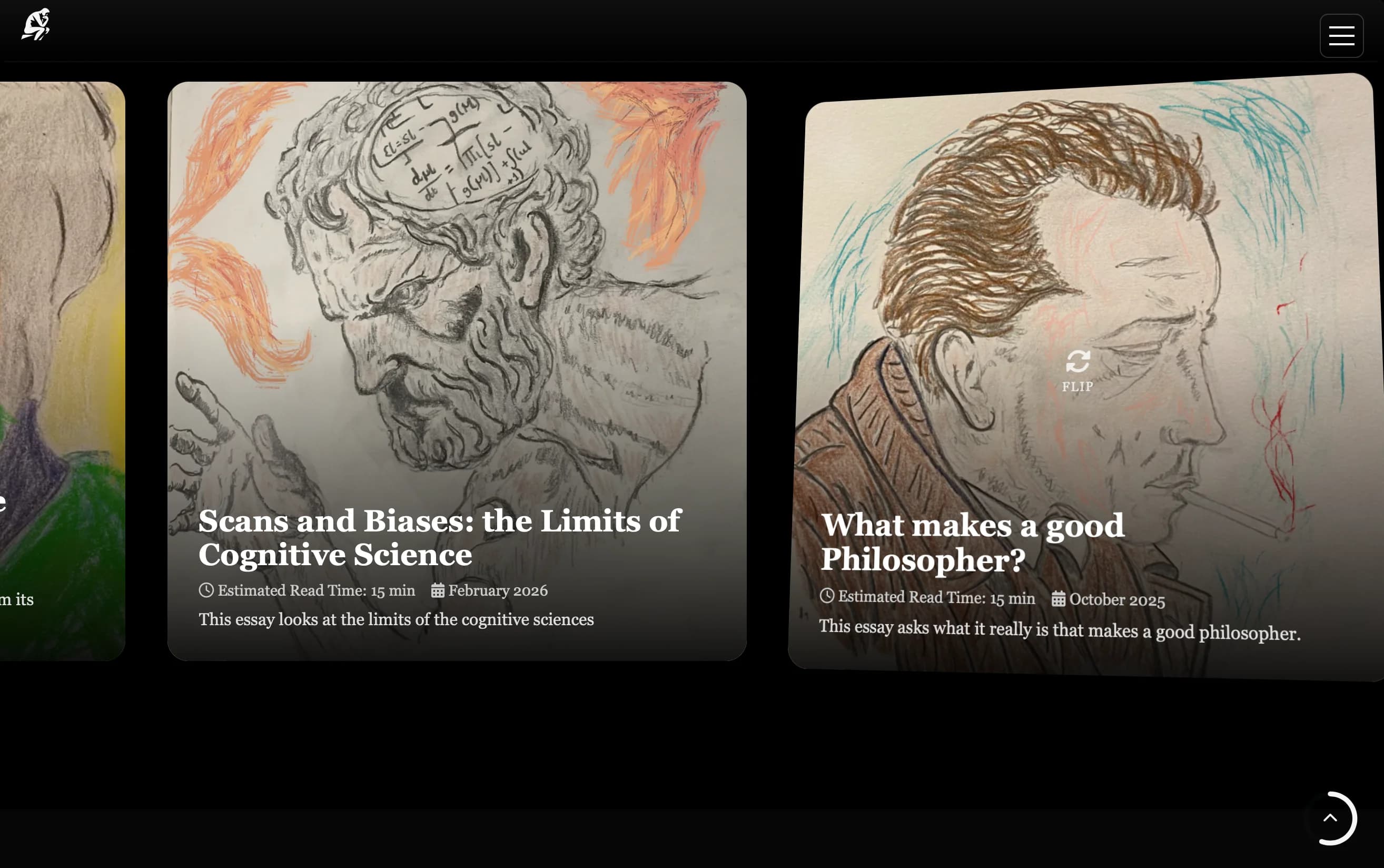
Create
Creative outlet
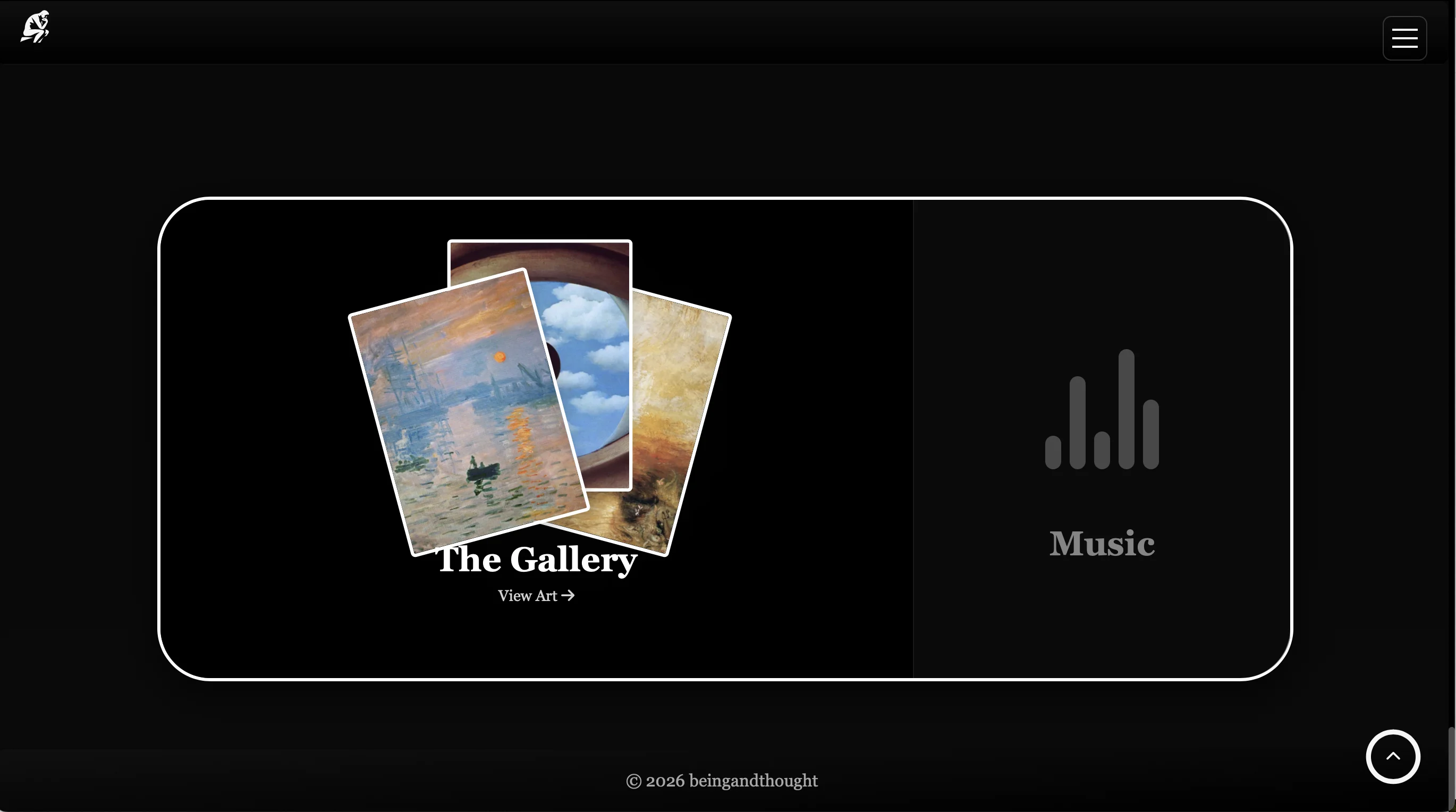
Beyond its technical role, Being & Thought functions as a creative outlet, allowing me to explore interests in literature, art, and music, practise skills like drawing, and deliberately expose myself to ideas and domains I might not otherwise encounter.
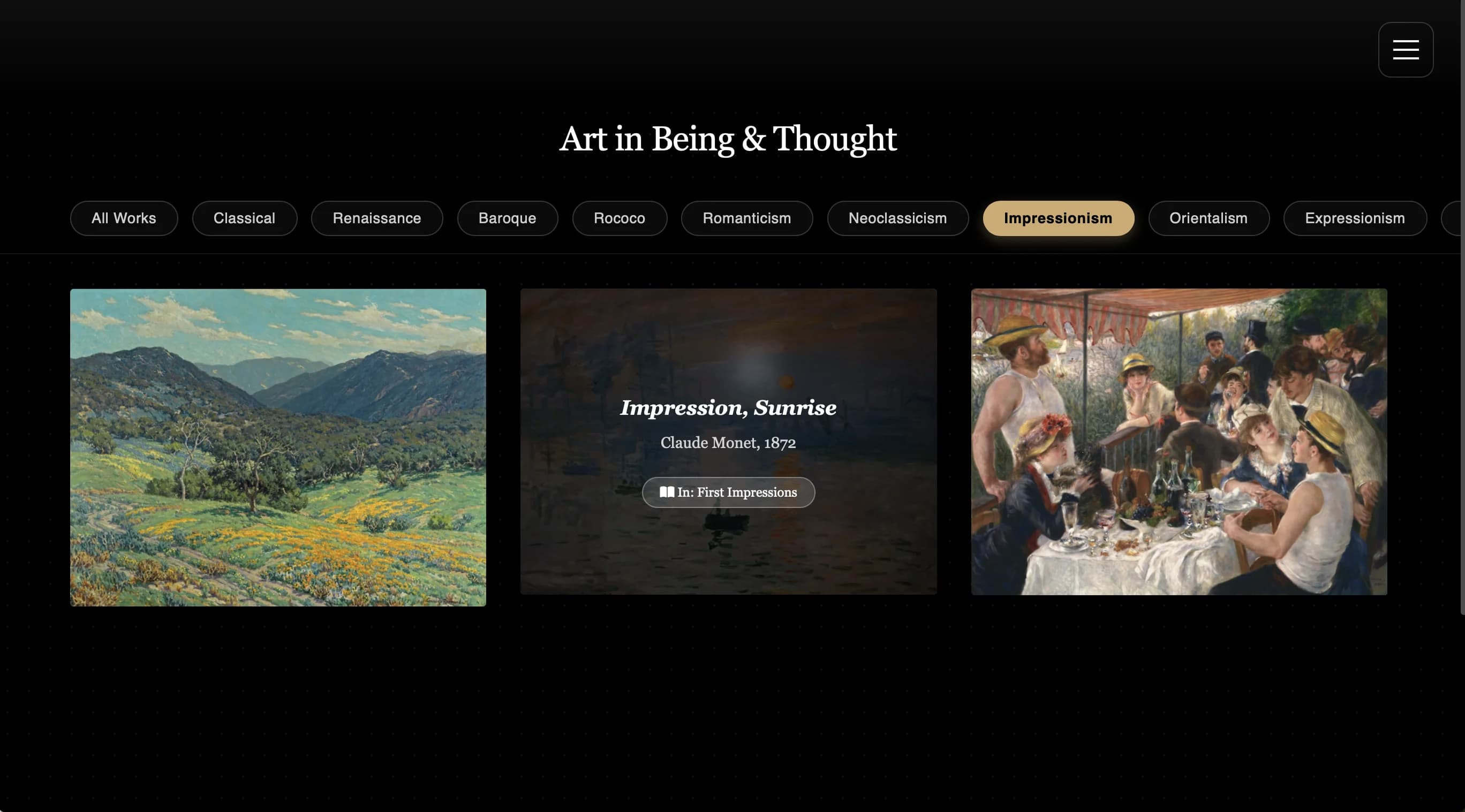
Art
Writing and analysis
Writing remains central to the site. It is a space to practise long-form thinking and to reflect on the writing itself, and I have used R and Python to analyse my own essays, exploring whether different themes shift my language, tone, or structure.
Design
Design and structure
I wanted the site to feel alive, so I built a custom newsletter system with Supabase and Resend. Subscribing stores a reader's email and sends a confirmation automatically, and when a new essay is published, a GitHub Actions workflow detects it and sends the newsletter to every subscriber.
Built with
- HTML5
- CSS
- JavaScript
- Supabase
- Vercel
More projects